Tile Shower Ideas: Patterns, Materials & Design Inspiration
Published April 30, 2026 • 7 min read
Weighing shower types? Our complete Prescott shower guide compares walk-in, tub-to-shower, curbless and groutless side by side, with real installed costs.
A custom tile shower is one of the highest-impact visual elements in a bathroom remodel. Unlike prefab panel systems, tile allows complete design control: material, color, scale, pattern, and grout all combine to create something unique to your home. This guide covers the options that consistently work well in Prescott bathrooms — with guidance on materials, patterns, and combinations that hold up over time.
Tile Materials for Shower Walls and Floors
Porcelain Tile
Porcelain is the most practical choice for shower walls and floors. It's harder than ceramic, non-porous (making it resistant to moisture and staining even without sealing), available in a huge range of sizes and looks, and highly resistant to scratching. Modern porcelain can convincingly replicate marble, limestone, travertine, and concrete. For Prescott's hard water, porcelain's non-porous surface is ideal — water spots wipe off instead of absorbing.
Floor porcelain: Look for a slip resistance rating (DCOF) of 0.42 or higher for wet shower floors. We typically recommend 2×2 or 4×4 mosaic for shower floors rather than large-format tiles because smaller tiles accommodate the necessary floor pitch to the drain more accurately.
Natural Stone
Marble, travertine, slate, and limestone each bring unique visual character. The trade-off is maintenance: natural stone is porous, requires sealing at installation and annually, and is susceptible to etching from acidic products (shampoos, conditioners, citrus-based cleaners). Marble in particular etch-marks when contacted with low-pH cleaners.
For Prescott's limestone aquifer, natural stone near water sources requires consistent sealing and wiping to prevent mineral deposit buildup. If you're committed to natural stone aesthetics, consider a porcelain marble-look tile for the shower and use genuine stone as a vanity countertop or accent — getting the look without the shower-specific maintenance burden.
Glass Tile
Glass tile creates visual depth and brightness that no other material matches — light passes through rather than reflecting off the surface. Best used as an accent strip, niche liner, or ceiling feature rather than a full shower wall material. Solid glass tile walls can look overwhelming at scale and are harder to clean in high-humidity environments (water spots are more visible on glass than on tile).
Shower Floor vs. Wall Considerations
Shower floors and walls have different requirements:
- Floor: Needs texture/slip resistance, smaller format accommodates the drain pitch, darker grout hides soap scum better.
- Walls: Can use large-format, smooth-surface tile — easier to clean. Running floor-to-ceiling in the same material as the walls reads contemporary and visually expands the space.
- Niche: Often done in an accent tile (mosaic, glass, or contrasting color) to frame it visually. The niche liner tile creates a visual break that reads intentional.
Pattern Ideas That Work
Large Format Continuous (12×24 or Larger)
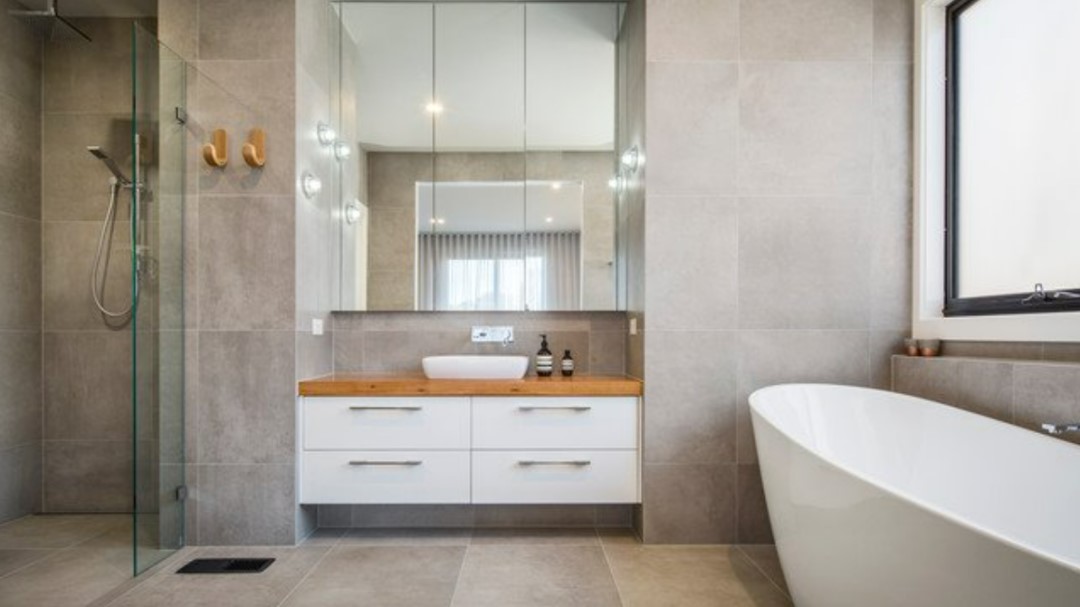
Running 12×24 or 12×36 porcelain vertically — floor to ceiling on all walls — with minimal grout joints (1/16") is the cleanest, most contemporary approach. The shower reads as a single surface rather than a grid. This works best when the tile has some movement (veining, texture) to add visual interest without relying on pattern for it.
Mixed Scale: Large Wall + Small Floor Mosaic
Large format walls (12×24 or 18×36) combined with a 2×2 mosaic shower floor is the most common combination in Prescott bathroom remodels we do. The large wall tile stays visually quiet; the mosaic floor can either match (same color, smaller format) or contrast (a stone-look mosaic against a simple white wall). This combination is timeless.
Herringbone Accent Wall
A single herringbone accent wall — typically the wall facing you when you enter the shower — creates a strong focal point. The surrounding walls in a complementary tile stay calm, letting the herringbone do the visual work. This works particularly well with 3×12 or 2×8 tiles in a warm white, cream, or greige against a neutral wall tile.
Vertical Stack Tile
Stacking subway or rectangular tile vertically rather than horizontally creates a different visual rhythm — elongating the walls, reading slightly more contemporary. This works especially well in showers with lower ceilings where you want to visually add height. A 3×12 or 4×16 tile in a vertical stack pattern achieves this without any unusual materials.
| Design Combination | Best For | Style |
|---|---|---|
| Large white porcelain walls + white mosaic floor | Easy cleaning, timeless appeal | Classic / transitional |
| Marble-look porcelain walls + hexagon mosaic floor | Upscale look, low maintenance | Transitional / luxury |
| Matte concrete-look porcelain floor to ceiling | Clean, contemporary | Modern / minimalist |
| Herringbone feature wall + plain surrounding tile | Strong focal point | Transitional |
| Zellige or handmade tile accent + large field tile | Artisanal, warm character | Mediterranean / craft |
Niche Design: The Details That Make the Difference
A recessed niche is both functional (built-in shelf for shampoo/soap) and a design moment. A few principles that consistently produce good results:
- Location: Position the niche at shoulder height on a non-plumbing wall (the wall that doesn't have the showerhead). Placing it on the showerhead wall means the niche gets sprayed directly — tile and grout hold up, but it requires more maintenance.
- Liner tile: Using a different (usually more decorative) tile inside the niche frames it and signals intentional design. Glass mosaic, metal-look tile, or a contrasting stone-look are all common choices.
- Width and height: A single niche of 12"×24" to 16"×32" is more useful than multiple small niches. Two shelves within the same niche opening creates more storage than two separate small niches.
- Pitched floor: The niche floor should be slightly pitched (1/8" per foot minimum) toward the shower to drain water rather than pooling. Often missed; causes water damage over time when not done correctly.
Grout Color Considerations for Showers
The grout choice matters even more in a shower than a backsplash because the total grout surface area is much larger. Three consistent principles:
- Epoxy grout over cement grout: In showers, epoxy grout is worth the cost premium every time. It's non-porous, stain-resistant, and doesn't require sealing. The difference in maintenance over 5 years is significant, particularly with Prescott's hard water.
- Medium grey grout on floors: White grout on shower floors shows soap scum relentlessly. A medium warm grey hides everyday buildup without going so dark it becomes a design statement on its own.
- Matching grout on walls: White or light grey walls with matching (slightly lighter) grout reads seamless. Contrasting dark grout on shower walls can look sharp initially but shows mineral deposits and hard-water buildup more clearly over time.
Frequently Asked Questions
How much does a custom tile shower cost in Prescott?
A mid-range custom tile shower — porcelain walls, mosaic floor, recessed niche, frameless glass door — typically runs $8,000–$16,000 installed in Yavapai County in 2025–2026. Luxury materials (natural stone, large-format porcelain slabs, multiple niches, steam shower systems) can run $18,000–$35,000+. These ranges include tile, waterproofing, installation labor, and glass enclosure; they exclude structural work if the footprint is changing.
What's the minimum shower size for large format tile?
There's no strict minimum, but large format tile (12×24 and up) looks most proportional in showers 36"×60" or larger. In very small showers (32"×32" or 36"×36"), large format tile can feel visually overwhelming and requires more cuts, which affects both cost and look. In small showers, 4×8 or 3×12 tile typically produces a better result.
How long does a tile shower installation take?
Demo, waterproofing, tile installation (walls and floor), grout cure, and final sealing typically takes 5–7 business days for a standard 3-wall shower. Add 7–14 days for frameless glass enclosure fabrication and installation after tile is complete. If a niche or multiple niches are involved, add 1–2 days for the framing and additional tile work.
Do I need to seal tile shower walls?
Porcelain tile walls don't require sealing — the material is non-porous. Ceramic tile walls are slightly porous and benefit from sealing. Natural stone absolutely requires sealing at installation and annually thereafter. Grout always requires sealing unless it's epoxy grout (which is inherently non-porous and doesn't need sealing).
Ready to Design Your Custom Tile Shower?
We carry tile samples from multiple suppliers. Schedule a free consultation and we'll help you find a combination that works for your bathroom and budget.
Schedule a Free ConsultationRelated Shower Resources
Tile & Custom Shower Service
Our tile shower installation service — materials, process, and what to expect.
Groutless Shower Walls
Solid surface, epoxy grout, and slab options for low-maintenance showers.
Bathroom Remodeling
Full bathroom remodels in Prescott — shower, vanity, flooring, and all finishes.