2026 Kitchen Design Trends: What’s In and What’s Out
Updated May 29, 2026 • 6 min read
Part of our Kitchen Design & Planning Guides — see all 8 guides in this category.
Design trends in kitchens move more slowly than social media would have you believe. What gets called a "trend" in January is usually a pattern that's been building for 2–3 years and will stick around for another 3–5. This guide separates the genuinely durable directions from the flashes-in-the-pan — filtered through what we're actually building for Prescott homeowners heading into 2026.
What's In for 2026
Warm, Earthy Tones Replacing All-White
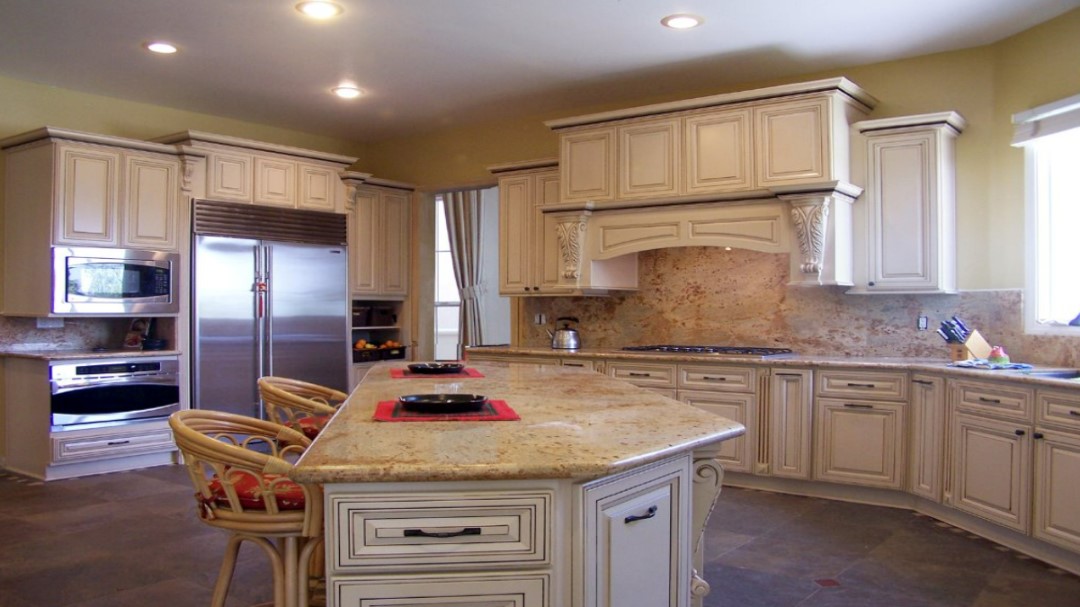
The all-white kitchen dominated the 2010s and early 2020s. In 2026, warm neutrals are taking over: warm white with cream undertones, greige (grey-beige), terracotta, olive green, and warm sage. These colors work particularly well in Prescott's craftsman and ranch homes and feel more at home in the high desert landscape than stark cool whites.
We're seeing this most clearly in cabinet colors — particularly on lower cabinets paired with lighter uppers (the two-tone trend below). Warm cream countertops (Silestone Calacatta Gold, MSI Calacatta Laza) are also gaining ground over the grey-veined white look that dominated for years.
Two-Tone Cabinets
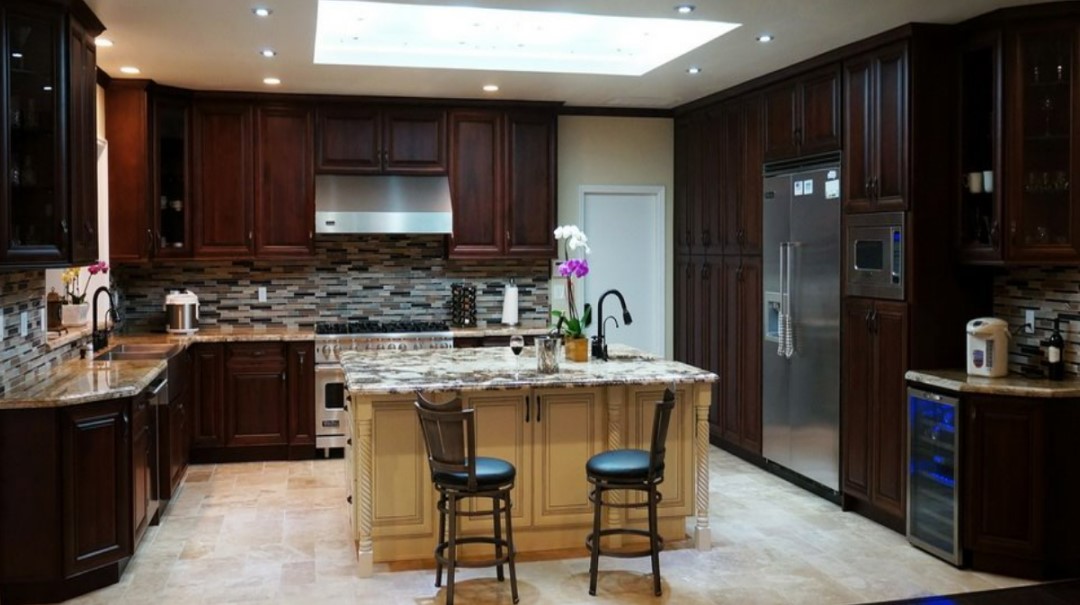
Two-tone kitchens — where upper and lower cabinets are different colors — are well past trend status. They're now a standard design choice that will be with us for years. The most common combination in Prescott: white or cream uppers with a colored lower (navy, sage green, dark forest green, or warm charcoal). This gives the kitchen visual weight and dimension without committing to an all-dark space.
The island is also frequently treated as a third color, or the same as the lowers, creating intentional contrast with the perimeter cabinets.
Unlacquered Brass and Warm Metals
The brushed nickel dominance is softening. Unlacquered brass (which patinas naturally over time), satin brass, and warm bronze are gaining significant market share in 2025–2026 hardware. This works especially well with the warm earthy cabinet colors above — a navy cabinet with unlacquered brass pulls reads as intentional and curated in a way that navy with chrome cannot match.
Mixed metals are also more acceptable now — not a design flaw, but a deliberate choice when done thoughtfully (matte black faucet, brass cabinet hardware, warm-tone light fixtures).
Large Format Tile Backsplashes
The classic 3×6 subway tile isn't going anywhere (it's genuinely timeless), but large format tile — 12×24, 18×36, or slab-look porcelain running full height to the upper cabinets — is the direction of the moment. Fewer grout lines read as cleaner and more contemporary. Full-height backsplash (countertop to upper cabinets) is particularly popular in kitchens with tall ceiling-height uppers, where it emphasizes the vertical space.
Hidden Appliances and Integrated Storage
Refrigerator panels that match cabinetry, appliance garages with pocket doors, and dedicated coffee stations with integrated outlets are all growing. The goal is a kitchen that looks like furniture rather than a utility room — clean surfaces with everything stored out of sight until needed. This is more achievable in custom and semi-custom cabinetry than in stock lines, but the direction is clear.
Natural Stone Countertops (Real and Lookalike)
Engineered quartz with prominent veining that mimics marble is still strong, but genuine natural stone — quartzite, marble, granite with striking movement — is getting more attention from homeowners who want uniqueness. Every natural stone slab is one-of-a-kind. Quartzite in particular (often confused with quartz — it's a natural stone) is gaining market share because it looks like marble but is significantly harder and less prone to etching.
What's Fading in 2026
| Trend That's Cooling | What's Replacing It |
|---|---|
| All-white kitchen with cool grey undertones | Warm white, cream, greige, earthy tones |
| Open shelving replacing all upper cabinets | One or two floating shelves as accents, not whole walls |
| Matte black hardware on everything | Unlacquered brass, warm bronze, mixed metals |
| Farmhouse sink as the statement piece | Undermount workstation sinks with integrated accessories |
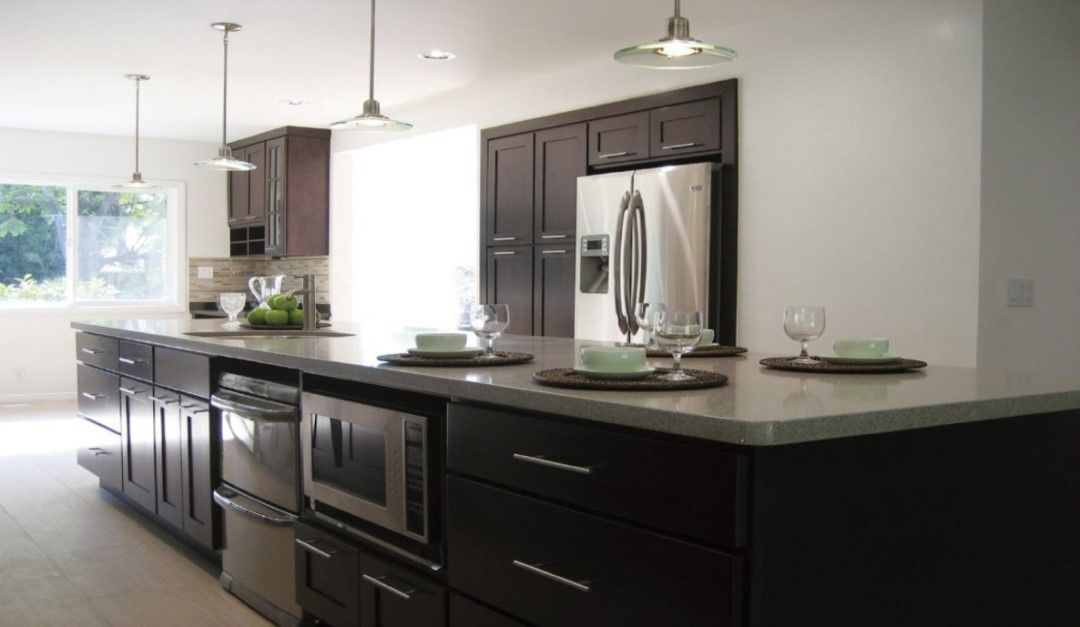
| Grey quartz countertops | Warm white and cream countertops with movement |
| Matching stainless steel appliances across all brands | Panel-ready refrigerators, targeted appliance statement pieces |
What's Genuinely Timeless (Don't Over-Think These)
Not everything in a kitchen needs to follow current trends. These choices have performed well across decades and will continue to:
- Shaker cabinet doors: 200 years old and still going. The simplicity is the point.
- White or off-white uppers: Reads clean, feels open, works with any countertop.
- Undermount single-basin sink: Functional, clean, and never looks dated.
- Recessed panel lighting (pot lights) on dimmer: Flexible and invisible — the right infrastructure for any design.
- Neutral countertops (white, cream, light grey): They don't fight with anything else in the room.
The mistake most homeowners make is applying trend-forward choices to these timeless elements — when they should apply them to accent choices that are cheaper to update later (hardware, light fixture, faucet, backsplash).
What This Means for a Prescott Kitchen Remodel
Prescott's aesthetic sensibility leans slightly more traditional than urban metros. The warm earthy palette aligns well with high desert surroundings. Two-tone cabinets in a craftsman or ranch home can feel very at home when the lower color is a muted green, deep navy, or warm charcoal rather than a saturated primary color.
The outdoor connection matters too. Prescott's exceptional outdoor living season creates an opportunity to design kitchen-to-outdoor flow intentionally — large windows, sliding doors adjacent to the kitchen, or a pass-through window to an outdoor kitchen or patio all amplify the kitchen's value and usability.
Frequently Asked Questions
Should I follow trends or choose timeless designs?
For structural and fixed elements (cabinet layout, countertop material, tile work), lean timeless — these are expensive to change. For accent and update-able elements (hardware, faucet, light fixtures, paint color), following a trend you love is low-risk because updating these later is affordable. Design the bones for longevity; inject personality through the accessories.
Are two-tone kitchens going out of style?
No. Two-tone kitchens have crossed from trend into established design practice. The specific color combinations shift over time (black and white is giving way to warm earth tones paired with colored lowers), but the approach of treating upper and lower cabinets differently is here to stay.
Is quartz still a good choice for 2026?
Absolutely. Quartz remains the most practical countertop material for kitchens — non-porous, maintenance-free, consistent coloring. The specific look is evolving (moving toward warmer tones and more natural stone movement), but the material itself is durable and a sound investment. Choose a color with warm undertones and some veining rather than a flat cool grey if you want it to feel current in 2026.
What colors are replacing grey in kitchens?
Warm whites and creams (on cabinets and countertops), warm greiges, soft sage and olive greens, and navy are the directions gaining momentum. On the cooler side, blue-greens and slate blues are holding up better than flat grey. Pure cool grey — the dominant cabinet and countertop color from approximately 2012–2022 — is increasingly feeling dated.
Let’s Design Your 2026 Kitchen Together
We stay current with materials, finishes, and design directions so you don't have to. Schedule a free consultation and we'll bring samples.
Schedule a Free Consultation