Porcelain vs. Ceramic Tile: Which Is Better for Bathrooms?
Serving Prescott, Prescott Valley, Chino Valley, and surrounding Yavapai County communities.
Part of our Material & Product Comparisons — see all 16 guides in this category.
Porcelain and ceramic are both clay-based fired tiles — but they aren't equal. The difference comes down to density, water absorption, and durability. For bathrooms and showers in Prescott, the choice matters more than many homeowners realize.
| Property | Ceramic | Porcelain |
|---|---|---|
| Water Absorption | 3%–7% | Less than 0.5% |
| PEI Hardness Rating | 1–3 (wall/light floor) | 3–5 (floor & heavy traffic) |
| Frost Resistance | Not frost-rated | Frost-rated options available |
| Weight | Lighter, easier to cut | Denser, harder to cut |
| Material Cost | $1–$5/sq ft | $3–$10/sq ft |
| Best For | Dry wall tile, light-use floors | Showers, wet floors, outdoor |
Understanding the Difference
Both porcelain and ceramic are made from clay that's fired in a kiln — but the clay composition and firing temperature differ. Porcelain uses a finer, denser clay blend fired at higher temperatures, which produces a harder, less porous tile.
Water Absorption: Why It Matters in a Shower
ANSI standards classify any tile with water absorption below 0.5% as porcelain. Most ceramic tile absorbs between 3% and 7% of its weight in water. In a shower that runs daily, that difference adds up. Highly absorbent tile behind grout joints creates a path for moisture into the substrate — the beginning of mold, tile loosening, and eventual failure. Porcelain's near-zero absorption is why it's the professional standard for shower floors and walls.
PEI Hardness Rating
The Porcelain Enamel Institute (PEI) rates tile hardness on a scale of 1–5. Ceramic typically rates 1–3, suited for walls and low-traffic floors. Porcelain reaches 4–5, appropriate for high-traffic floors and commercial settings. For bathroom floors — especially in a primary bath used daily — PEI 3 or higher is recommended.
Where Each Tile Belongs
Shower Walls & Floors: Porcelain
Porcelain is the right choice for any wet application. Its low absorption rate keeps moisture from penetrating the tile body, and frost-rated porcelain options handle Prescott's cold winters when used in exterior or unheated shower areas. The harder surface also resists cracking better when subjected to heavy showerhead pressure and daily thermal cycling.
Bathroom Floor: Porcelain (or High-PEI Ceramic)
For bathroom floors outside the shower, a PEI 3+ ceramic can work — but porcelain is still the better long-term choice. Its resistance to moisture and harder surface holds up better to cleaning products over decades. If you have kids or heavy foot traffic, stick with porcelain throughout.
Bathroom Walls (Dry Areas): Ceramic Is Fine
For walls outside the shower — behind a vanity, on a half-wall, or as a decorative accent — ceramic performs perfectly well. It's easier to cut and handle, which can reduce labor costs slightly. Just keep it out of wet zones.
Kitchen Backsplash: Either Works
Backsplash tile rarely sees sustained water exposure (it's splash, not immersion), so ceramic is a legitimate choice here and often offers a wider range of decorative styles at lower cost. For kitchen floors, go porcelain.
Frost Resistance in Prescott
Prescott sits at 5,400 feet elevation. Winter temperatures regularly drop below freezing — and outdoor-adjacent tile (covered patios, garages, entryways) sees freeze-thaw cycling. Ceramic tile is not frost-rated and will crack when moisture inside it freezes and expands. For any application where outdoor temps can be felt, use frost-rated porcelain only.
Cost Comparison
Ceramic tile typically runs $1–$5/sq ft for materials; mid-range porcelain runs $3–$10. Large-format porcelain (24"x48" and up) can run $8–$20+. Installation labor is similar for both — $8–$18/sq ft installed — though large-format porcelain requires more precision and a skilled installer.
Frequently Asked Questions
Can you tell the difference between porcelain and ceramic visually?
Sometimes — ceramic often has a visible color difference between the surface glaze and the clay body when you look at a cut edge. Porcelain is typically the same color throughout. But many modern ceramic tiles look nearly identical to porcelain on the surface. Check the spec sheet, not just the appearance.
Is rectified tile the same as porcelain?
No. Rectified just means the tile edges have been mechanically cut to precise dimensions after firing, allowing for tighter grout lines. Both ceramic and porcelain can be rectified. Rectified tile is preferred for large-format applications regardless of material.
What slip resistance rating do I need for a shower floor?
Look for a DCOF (Dynamic Coefficient of Friction) rating of 0.42 or higher for wet floor applications. Most porcelain shower floor tile sold in textured or mosaic formats meets this threshold. A smooth large-format tile may look sleek but can be dangerously slippery when wet.
Does Infinity Kitchens and Baths tile showers?
Yes — tile shower installation is one of our core services. We handle everything from substrate prep (cement board, waterproofing membrane) through tile selection, setting, grouting, and sealing. We source quality porcelain lines at contractor pricing and can bring samples to your home.
Ready to Tile Your Shower or Bathroom?
We install porcelain and ceramic tile throughout Prescott, Prescott Valley, and Chino Valley. Let's find the right tile for your project.
Related Articles
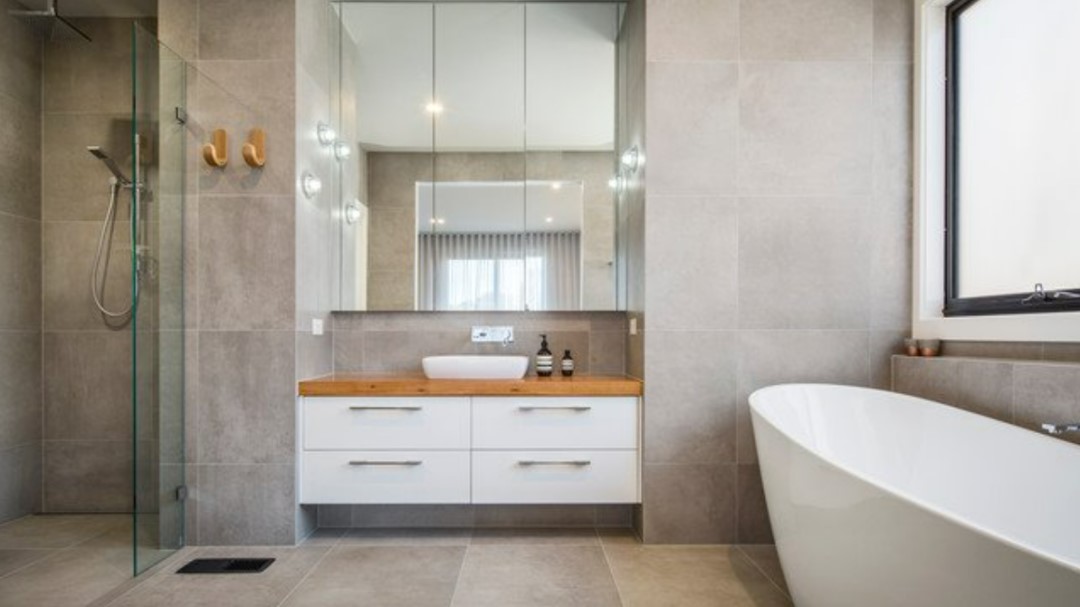
Tile & Custom Shower Installation
Our tile shower services — design, waterproofing, and professional installation.
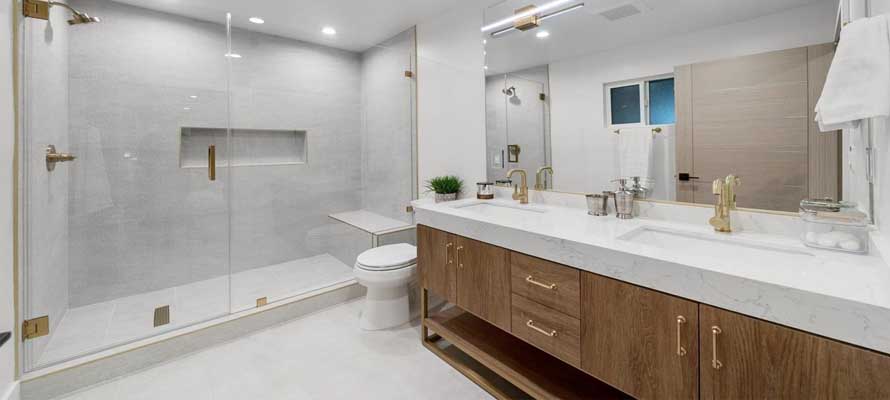
Bathroom Remodel Cost Guide
What a bathroom remodel costs in Prescott — by scope and finish level.
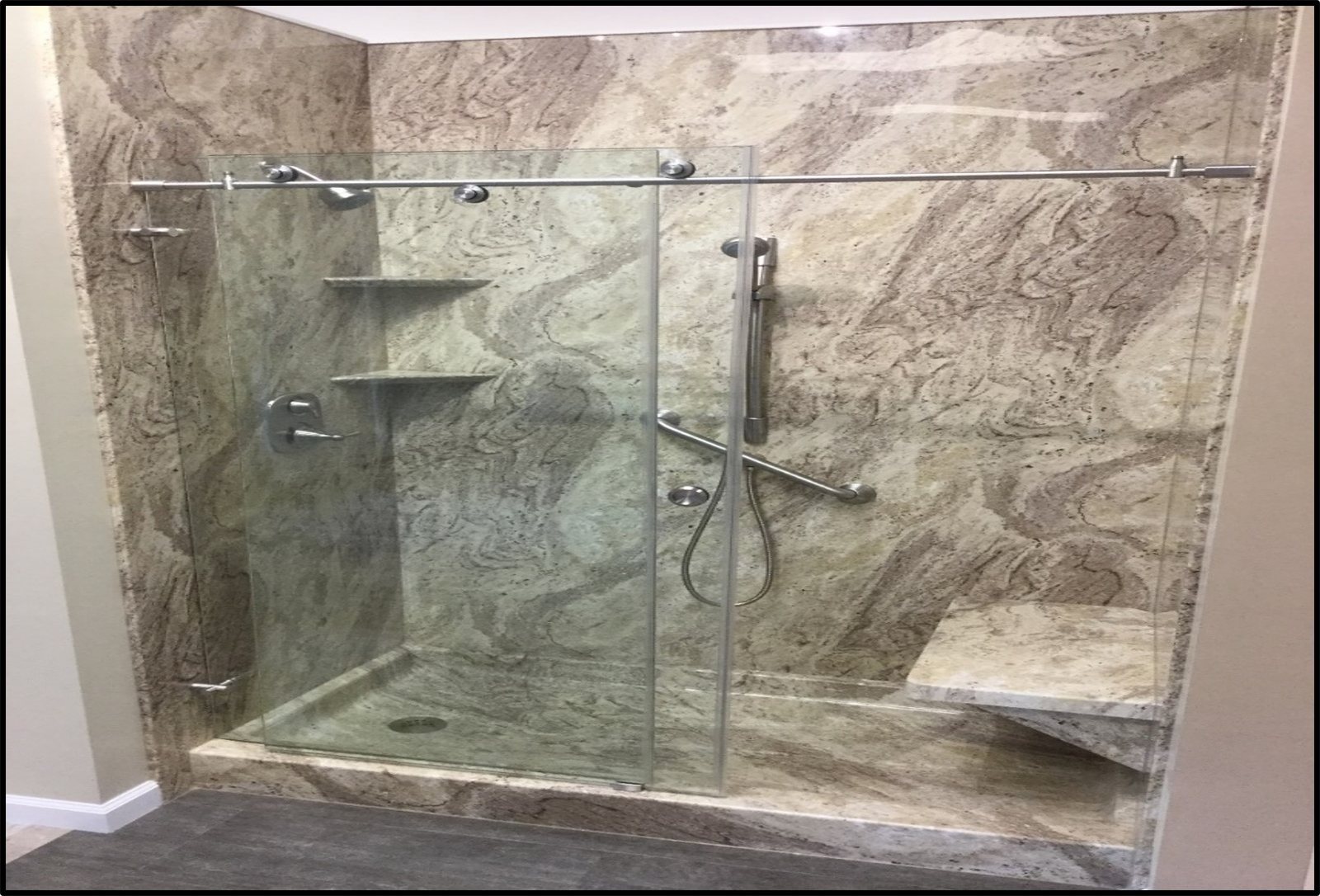
Walk-In Showers
Custom walk-in showers with tile, glass enclosures, and barrier-free design.