Aging in Place Remodeling: A Complete Guide for Arizona Homeowners
Published June 15, 2026 • 10 min read
Prescott is one of the top destinations in the country for retirement — and with that demographic comes one of the highest concentrations of aging in place remodeling work in Arizona. Over half of our bathroom remodels include accessibility modifications, and a growing share of our clients are planning proactively rather than reactively — updating their home before a fall or mobility change forces an urgent decision. This guide covers the whole-home approach: what to assess, what to modify by room, what it costs, and where funding may be available.
What "Aging in Place" Actually Means
Aging in place means modifying a home to remain safe and livable as physical capabilities change — without moving to assisted living or requiring full-time care. The goal is independence for as long as possible, in a familiar environment. For most Prescott homeowners, this means addressing three categories of risk:
- Fall prevention: Eliminating tripping hazards, adding support surfaces, improving floor traction
- Accessibility: Allowing access to all rooms and functions regardless of mobility device (cane, walker, wheelchair)
- Usability: Making everyday tasks (bathing, cooking, moving between spaces) doable without assistance
Aging in place modifications are not a single type of project — they range from minor hardware changes to full bathroom rebuilds to structural changes for doorway widening. Planning the right scope requires honest assessment of current and likely future needs.
Whole-Home Assessment: Where to Start
Before any work begins, walk through the home with these questions:
Entry and Exterior
- Is there a step at the main entry? A step-free ramp or zero-threshold entry is the most critical accessibility modification.
- Is the path from the car to the entry well-lit, slip-resistant, and level?
- Is the garage entry usable as an alternative entry if the main entry has steps?
Interior Circulation
- Are all essential rooms (bedroom, bathroom, kitchen) on one level? Multi-story homes present the most significant aging in place challenge.
- Are doorways 32"+ clear width? Standard doors (28"–30") don't accommodate wheelchairs or walkers easily.
- Are hallways 36"+ wide? Minimum for walker or wheelchair passage.
- Are thresholds between rooms flush or near-flush?
Flooring
- Area rugs are among the most common fall hazards in older homes — they catch feet and shift under wheels.
- High-pile carpet makes wheelchair and walker movement significantly harder.
- Transitions between flooring types should be flush, not raised.
Bathroom Modifications (Highest Priority)
The bathroom is where most home falls occur and where modifications make the most difference. The highest-priority changes:
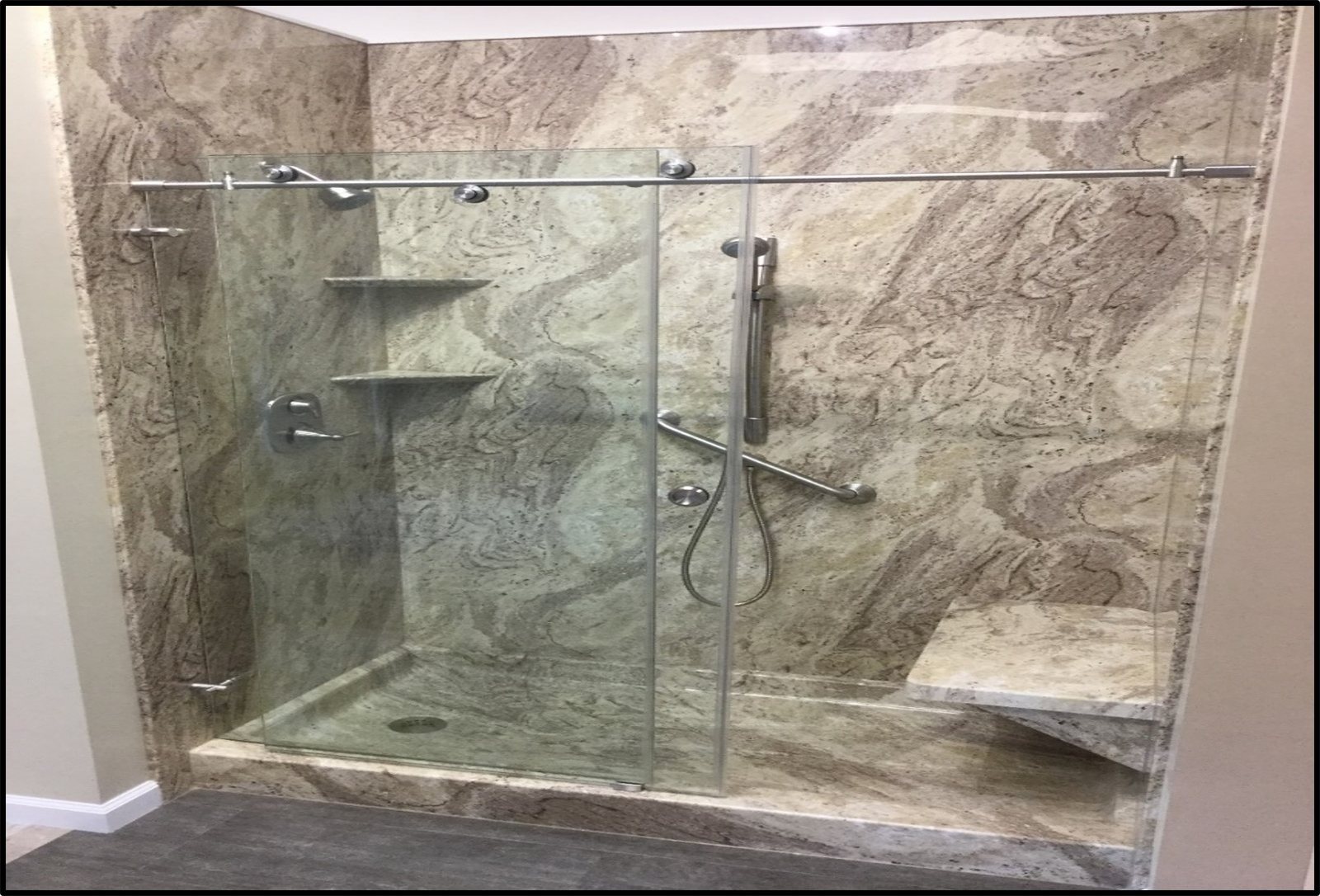
- Curbless shower: Eliminates the step-over entry hazard. Requires subfloor restructuring — must be done during a bathroom remodel, not as an afterthought.
- Grab bars: At shower entry (vertical), shower interior (horizontal, angled), and beside the toilet. Must be anchored to blocking or studs, not just tile.
- Comfort height toilet: 17"–19" seat height vs. 14"–15" standard. Significantly easier to rise from for anyone with knee or hip limitations.
- Shower seat: Fold-down or built-in bench allows seated bathing.
- Lever faucets: Replace knobs with lever handles at sink, shower, and tub.
- Wide doorway: 32"+ clear width for wheelchair access.
- Non-slip flooring: Textured porcelain with DCOF 0.60+ for wet floors.
Kitchen Modifications
Kitchen aging in place modifications focus on reach, maneuverability, and reducing the need to bend or stretch:
- Pull-out shelves in base cabinets: Eliminate the need to reach deep into cabinets from a low position.
- Drawer base cabinets: Replace door-and-shelf base cabinets with full-extension drawers — accessible from a standing or seated position.
- Lever or D-ring pulls: Replace small knobs with hardware that can be operated with a closed fist.
- Raised dishwasher: Mounting the dishwasher on a raised platform (12"–18") eliminates deep bending for loading and unloading.
- Side-by-side refrigerator or French door: Easier access to refrigerator contents without bending vs. a bottom-freezer or single-door unit.
- Lower section of countertop: A section of countertop at 32"–34" (vs. standard 36") allows seated food preparation.
Bedroom Modifications
- Bed height: 18"–20" from floor to mattress top is the easiest height for sitting down and standing up. Platform beds are typically too low; very old spring-box systems may be too high.
- Nightstand lighting: Motion-activated nightstand lighting reduces the risk of falls during nighttime movement to the bathroom.
- Clear floor path: A minimum 36" clear path around the bed for walker or wheelchair navigation.
- Bedroom on main level: If the primary bedroom is upstairs and stairs become difficult, a main-floor bedroom option is worth planning for during any remodel.
Staircase and Level Changes
For two-story homes, stairs represent the most significant aging in place risk. Options:
- Stair rail on both sides: Standard staircases have a rail on one side. Adding a second rail on the opposite wall significantly improves stair safety.
- Stairlift: A motorized chair lift on a track — an accessible modification that doesn't require construction but does require rail installation. Typically $3,000–$6,000 for a straight staircase.
- Home elevator: A residential elevator or vertical platform lift connecting two floors. Typically $20,000–$40,000 installed. Requires planning space and structural consideration.
- Relocating essential functions to main floor: For some homes, the most practical solution is converting a main-floor room to a bedroom and ensuring the main-floor bathroom is fully accessible — eliminating stair use for daily living.
Arizona-Specific Resources and Funding
Several programs may help fund aging in place modifications for qualifying Arizona homeowners:
- Arizona Long Term Care System (ALTCS): Arizona Medicaid's long-term care program may cover home modifications for qualifying individuals (income and care-need based).
- Veterans Affairs (VA): The VA's Specially Adapted Housing (SAH) and Special Housing Adaptation (SHA) grants provide funds for qualifying veterans to modify their home for accessibility. Contact the Prescott VA Medical Center for local support.
- Arizona Department of Economic Security (DES): The Adult Protective Services division can connect eligible seniors with home modification resources.
- Area Agency on Aging (AAA) — Yavapai County: Northern Arizona Council of Governments (NACOG) administers aging services for Yavapai County including some home modification assistance programs. Contact NACOG directly for current program availability.
- USDA Section 504 Home Repair Program: For rural homeowners meeting income requirements, USDA provides grants (for homeowners 62+) and low-interest loans for home repair and accessibility modifications.
- Tax deductions: Some medical home modifications may be deductible as medical expenses on federal taxes if they meet IRS requirements. Consult a tax professional.
Aging in Place Modification Costs in Prescott (2025–2026)
| Modification | Typical Cost Range |
|---|---|
| Grab bars (3–4 bars, properly blocked) | $400–$900 |
| Comfort height toilet replacement | $350–$700 |
| Lever hardware throughout home | $800–$2,500 |
| Doorway widening (per doorway) | $800–$2,500 |
| Curbless shower conversion (full bathroom remodel) | $18,000–$35,000 |
| Entry ramp (exterior, no steps) | $2,000–$6,000 |
| Comprehensive aging in place assessment + full scope | $8,000–$50,000+ depending on home |
Frequently Asked Questions
When is the right time to do aging in place modifications?
The answer from most remodeling contractors and occupational therapists is the same: proactively, before you need them. Modifications done during a planned bathroom remodel cost a fraction of the same modifications done urgently after a fall or diagnosis. And the modifications — a curbless shower, a grab bar in brushed nickel — look better and integrate more cleanly into a space when they're part of a full design versus bolted on afterward.
Do I need an occupational therapist assessment before starting?
Not required, but useful for comprehensive planning — particularly if there's a specific diagnosed condition, a recovering injury, or mobility changes that make current limitations clear. An OT assessment identifies specific functional needs that go beyond what a contractor typically evaluates. For straightforward proactive modifications (a curbless shower, grab bars, comfort height toilet), an OT assessment isn't necessary to get started.
Will aging in place features hurt my home's resale value in Prescott?
In Prescott's retirement demographic, no — and often the opposite. Well-executed aging in place modifications (curbless shower with frameless glass, modern grab bars, comfort height fixtures) are viewed as premium features by the same buyers who are most likely to purchase homes in this market. The key is execution — modifications that look designed rather than medical are neutral to positive for resale.
What's the most important thing to do first?
Assess your bathroom — specifically whether you could convert to a curbless shower. This is the highest-risk space, the highest-impact modification, and the one that's most expensive and disruptive to add later. If a bathroom remodel is in the plan at all, include the curbless conversion. Everything else (grab bars, lever handles, toilet height) can be added later if needed, but the shower floor modification requires opening up the space.
Planning an Aging in Place Remodel in Prescott?
We specialize in modifications that look beautiful and work better. Schedule a free home assessment — we'll walk every space and give you honest recommendations.
Schedule a Free Home Assessment